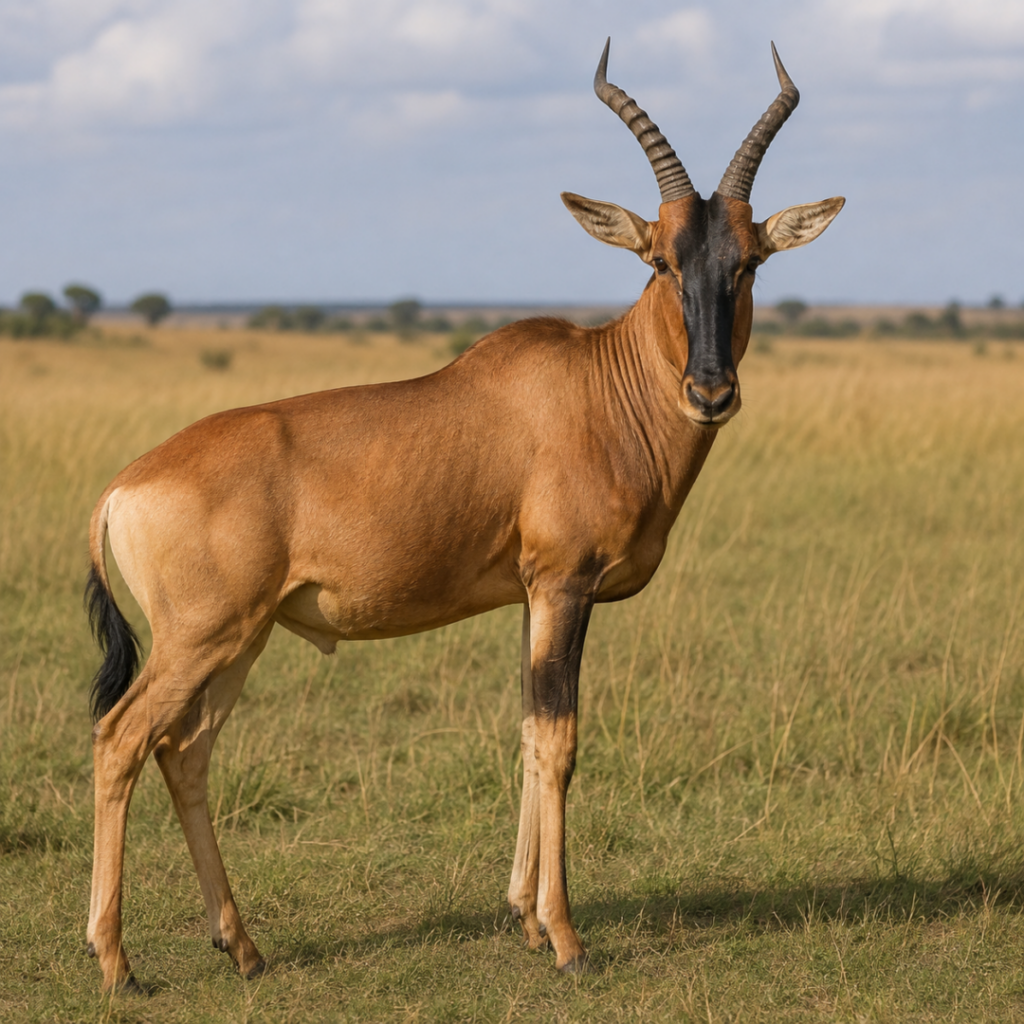
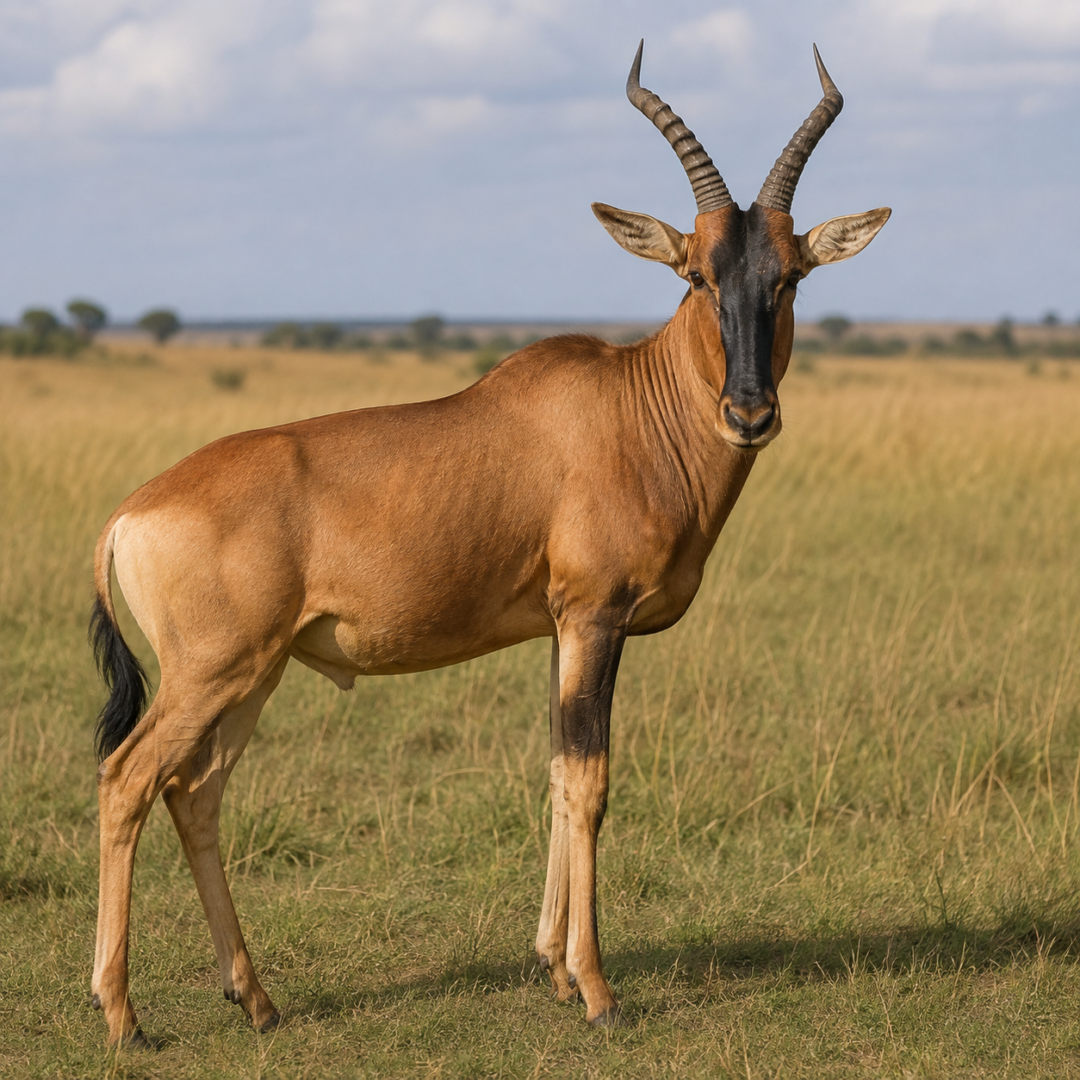
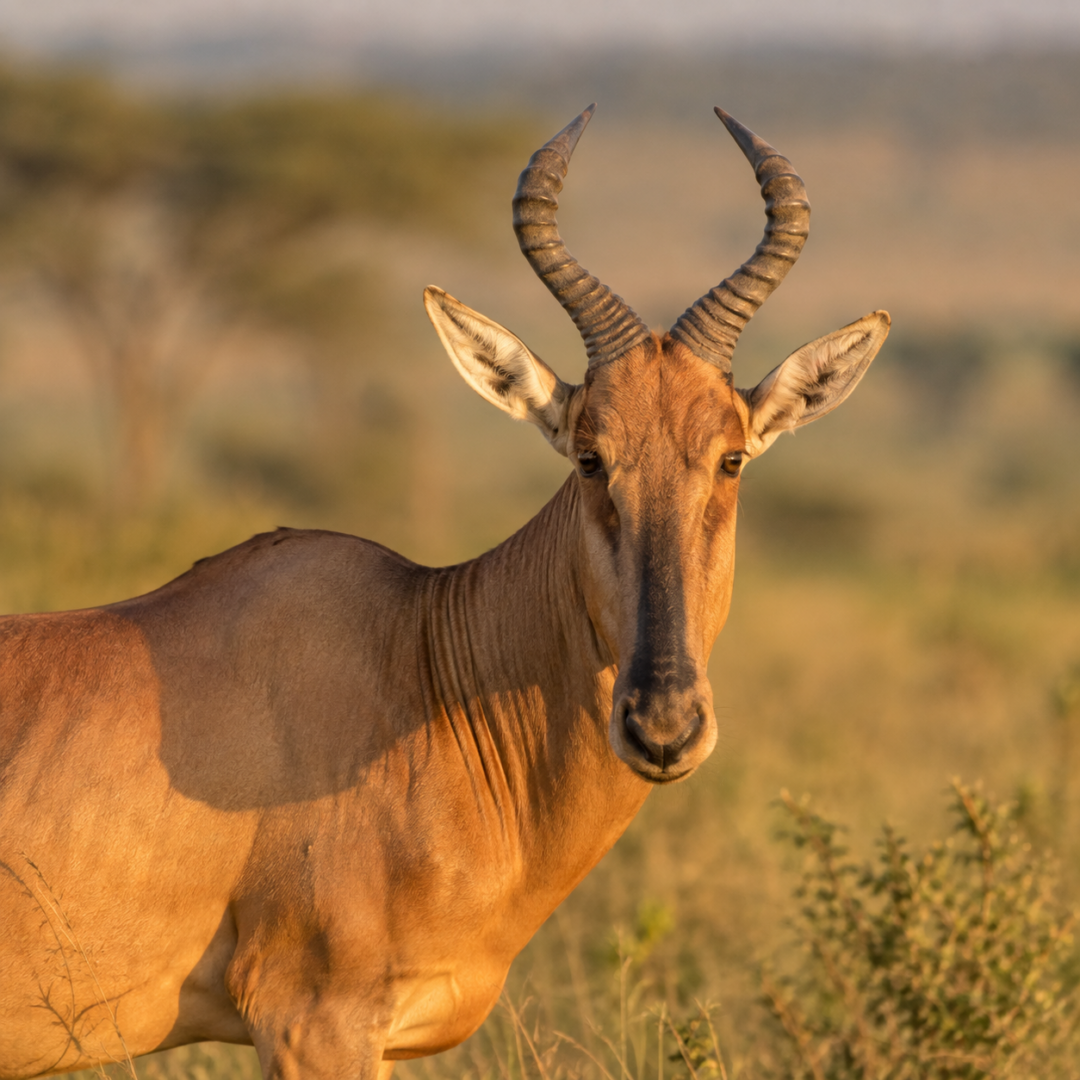
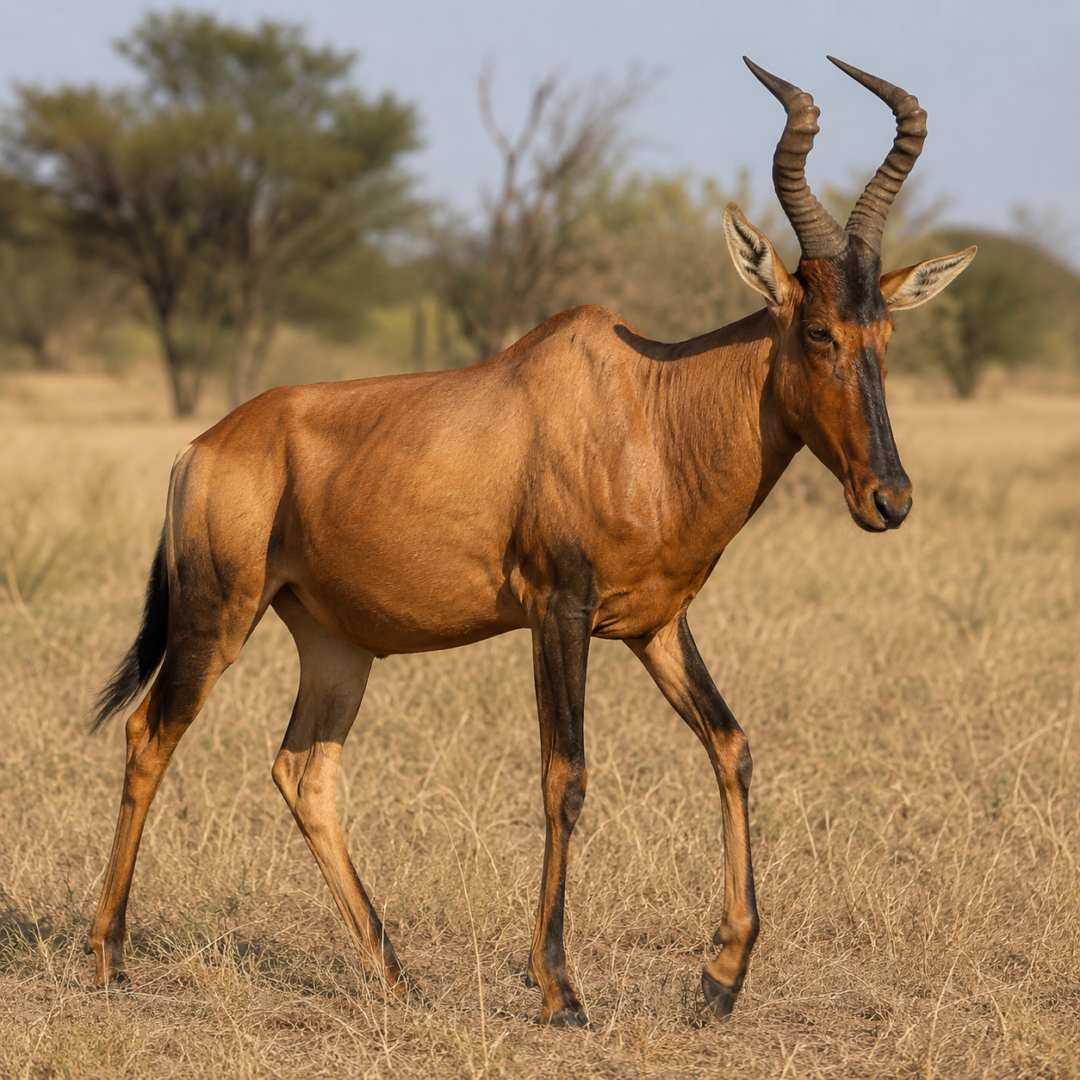
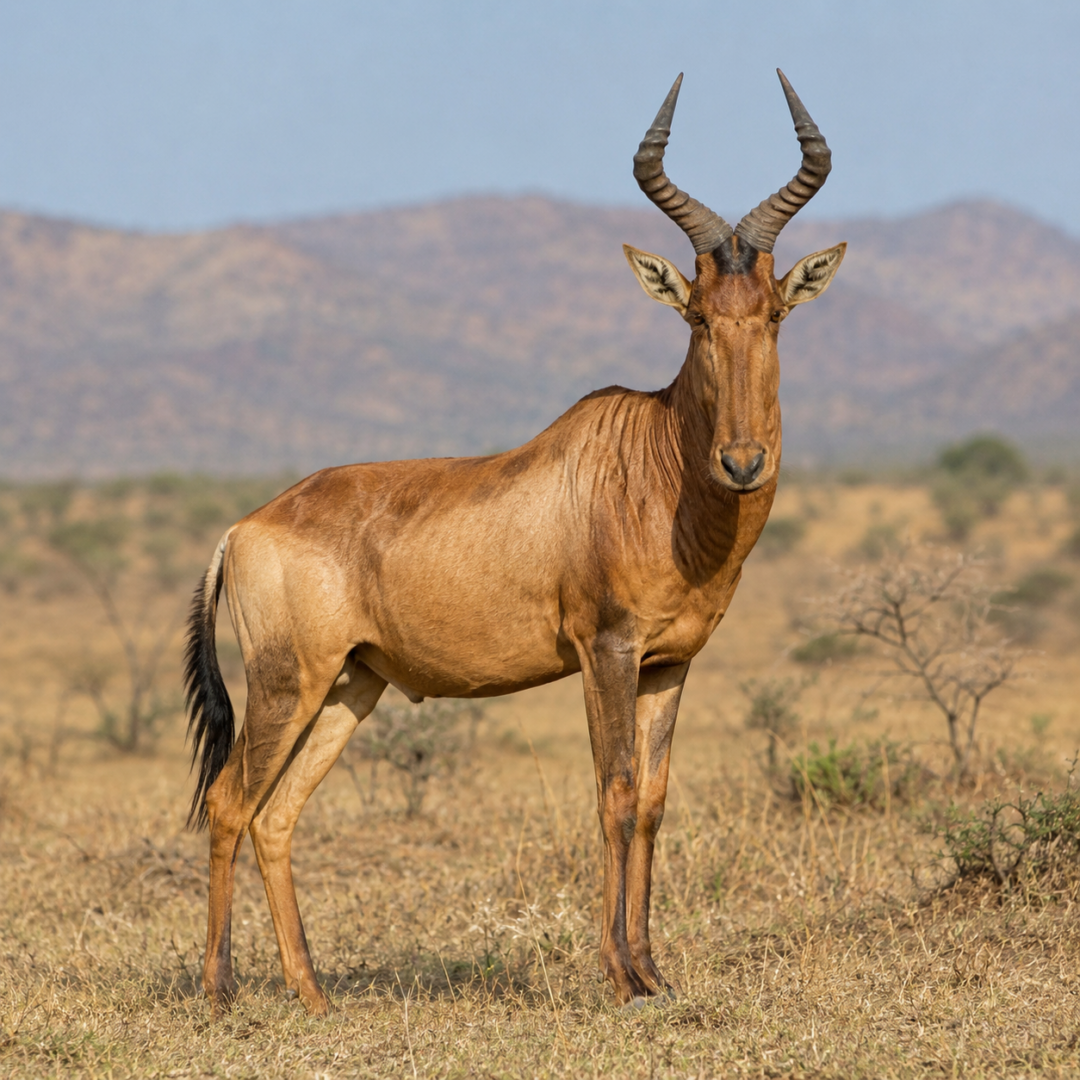
Distribution: Lichtenstein Hartebeest historically occurred widely through the miombo woodlands of south-central Africa. Today, its principal populations occur in protected wildlife areas in Tanzania, Mozambique and Zambia, with smaller populations surviving elsewhere in the region. The subspecies has also been reintroduced into parts of South Africa, including the Kruger National Park and private Lowveld reserves.
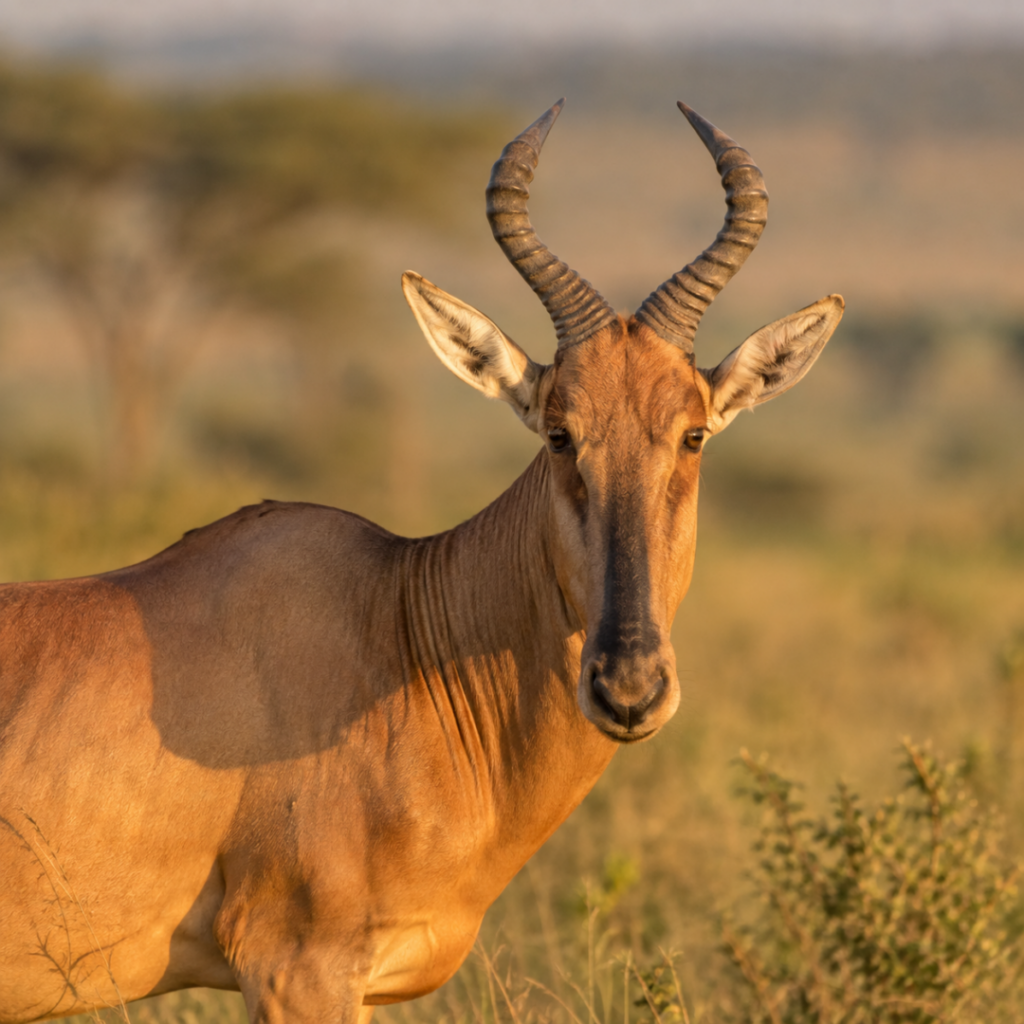
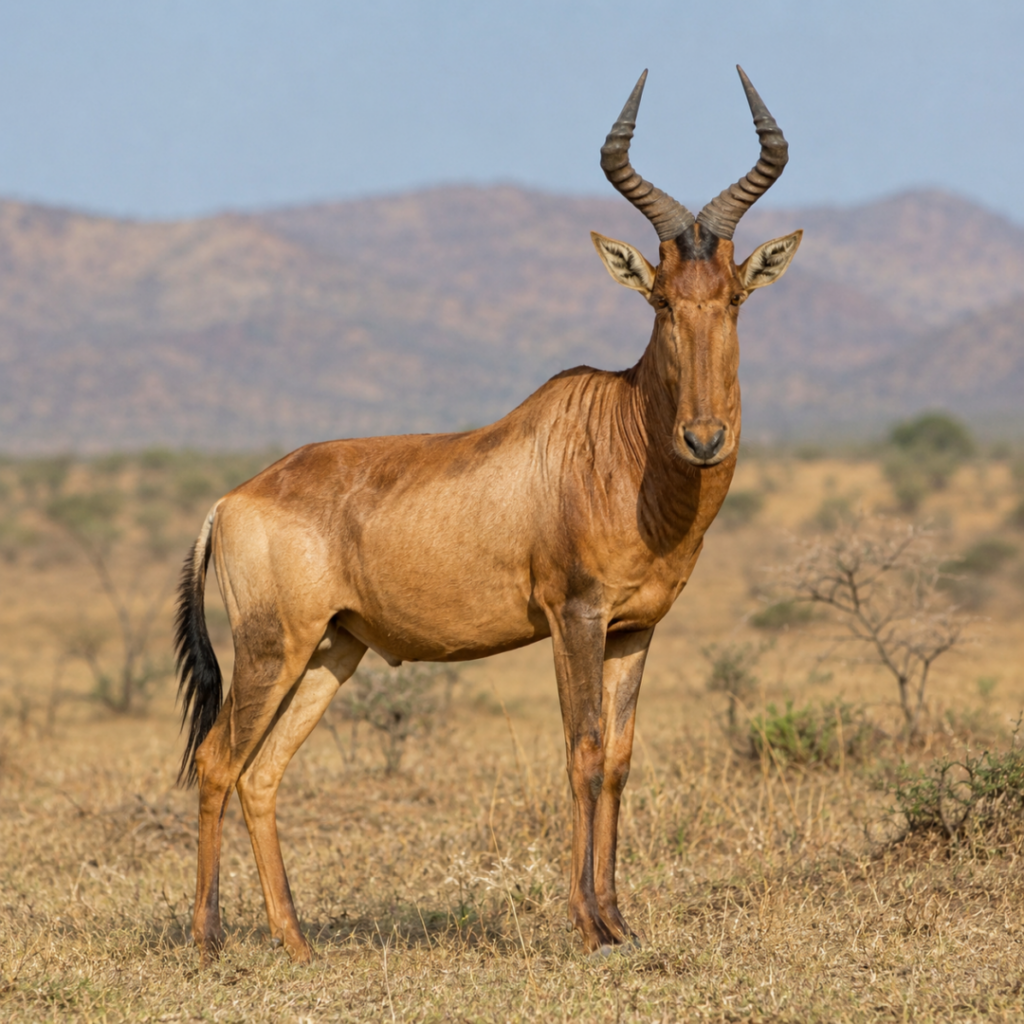
Rowland Ward Reference: Trophy quality is judged by mature horn length, horn symmetry, horn mass, and overall horn shape.
Ecological Role: Lichtenstein Hartebeest are primarily grazers, feeding on grasses and helping shape vegetation within savanna, floodplain and woodland ecosystems.
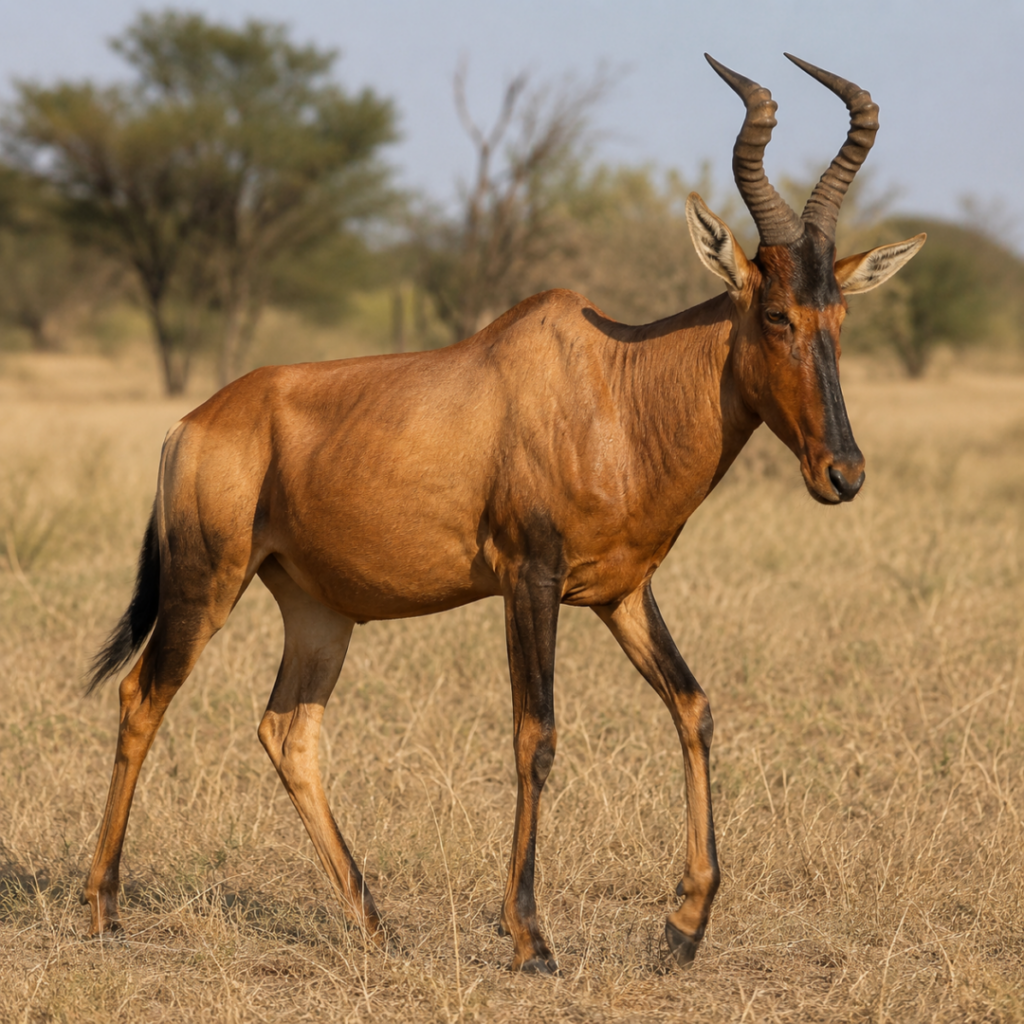
Hunting Heritage: Lichtenstein Hartebeest is a distinctive southern and east-central African plains-game animal, recognised for its unusual horn shape, elongated face and strong shoulder profile.
Fascinating Adaptation: Its high shoulders, sloping back and elongated head are well suited to selective grazing, allowing the animal to feed efficiently while remaining alert in open grassland and woodland habitats.