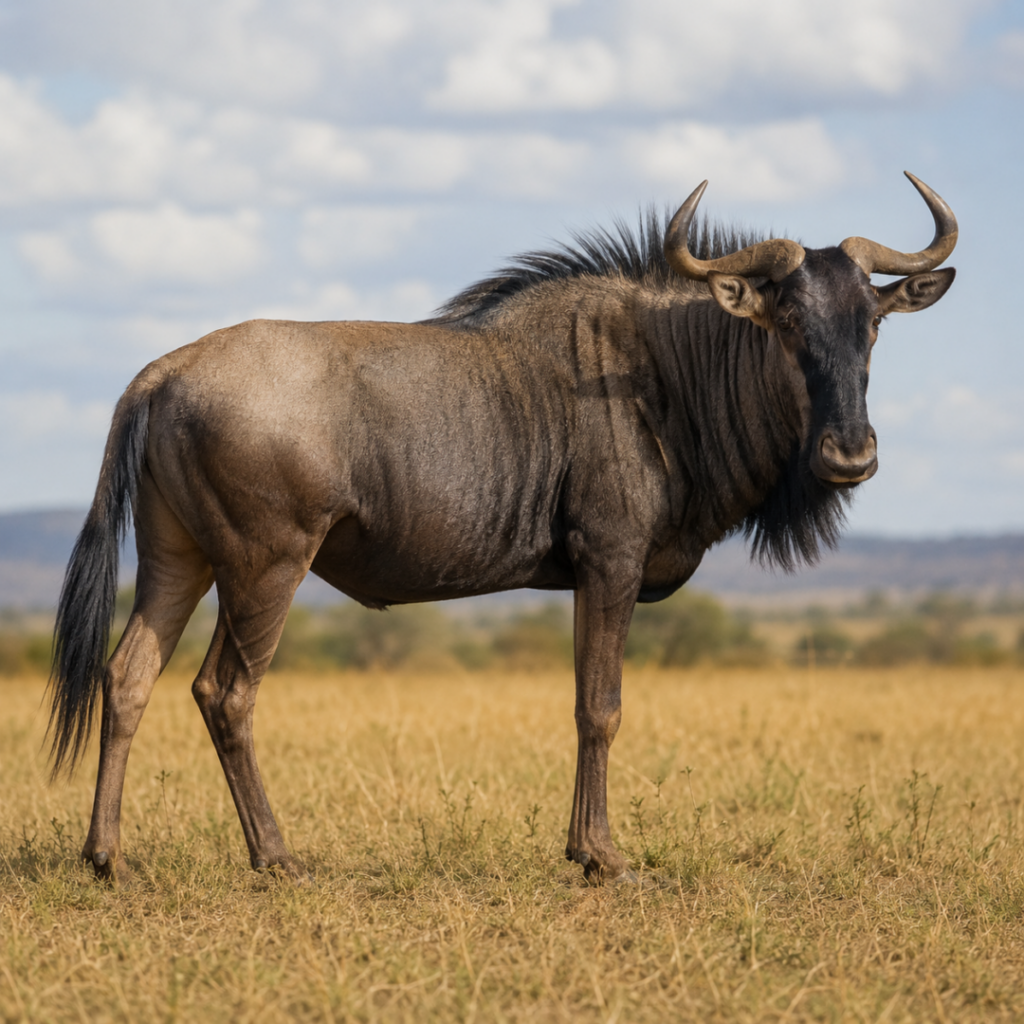
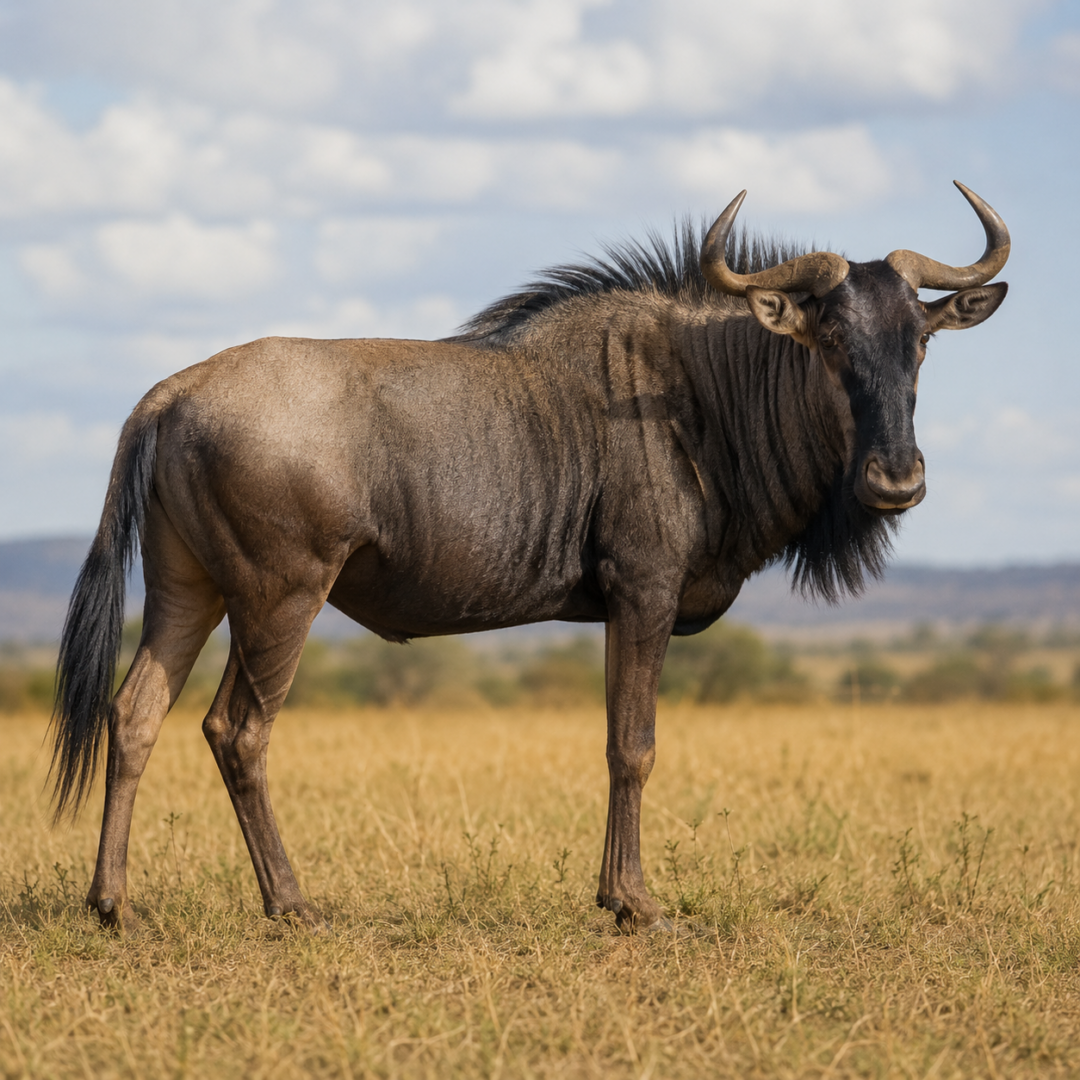
Distribution: Nyasaland Wildebeest occurs mainly north of the Zambezi River in Mozambique and into east-central Tanzania. It formerly occurred in Malawi, where it became extinct by the end of the nineteenth century.
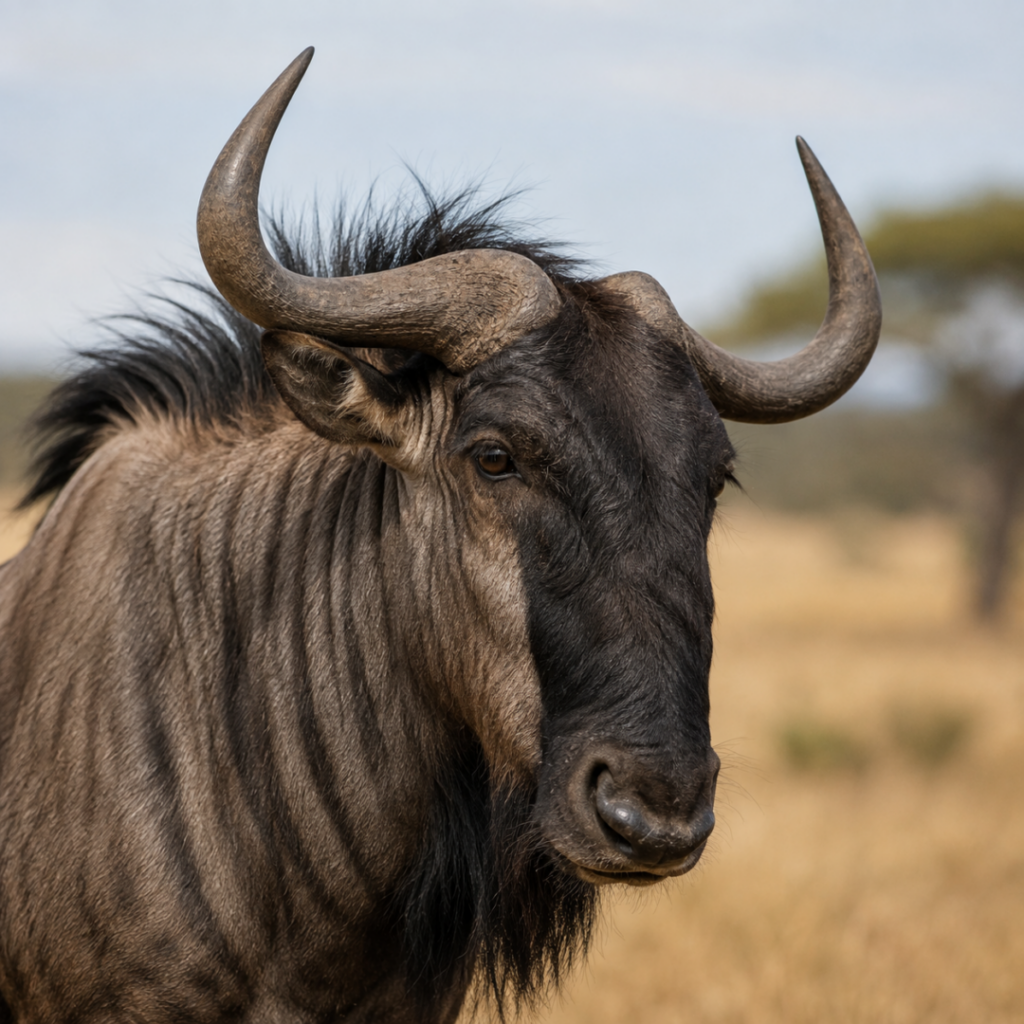
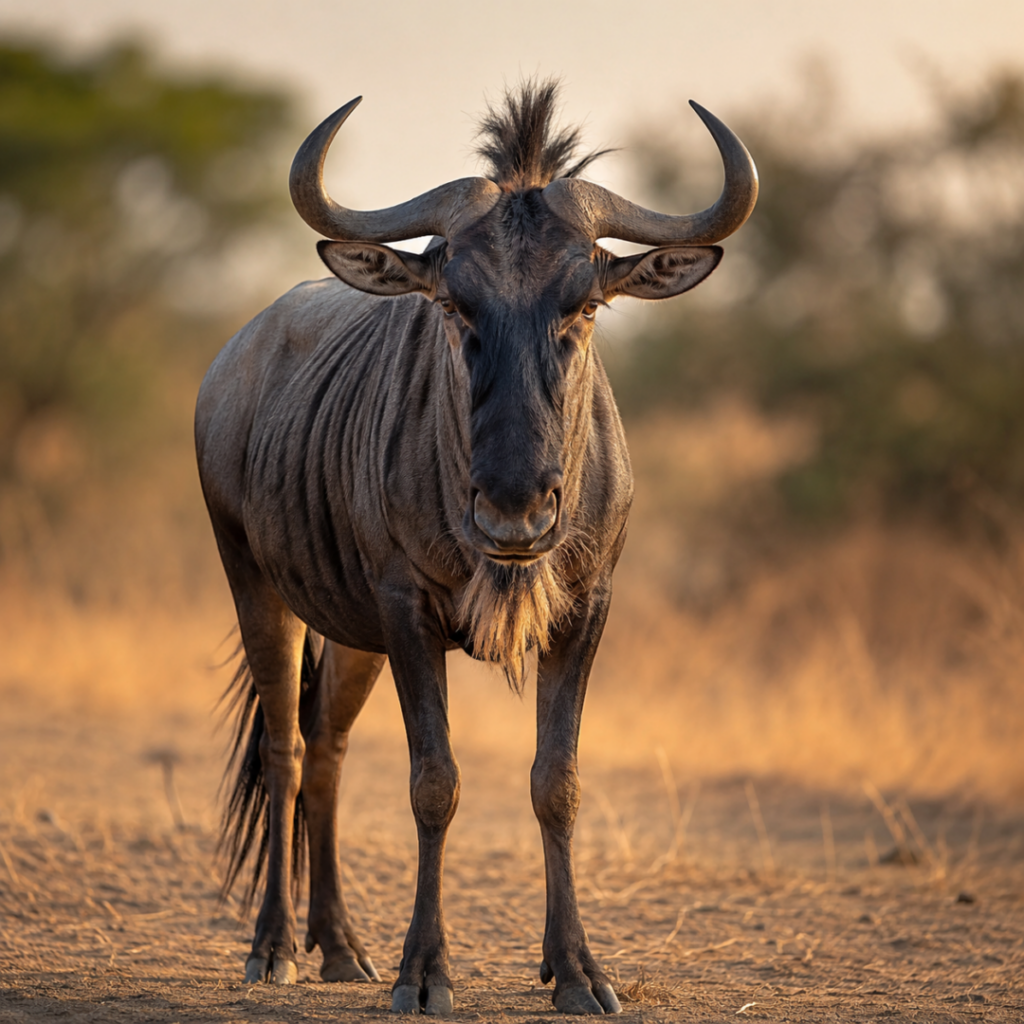
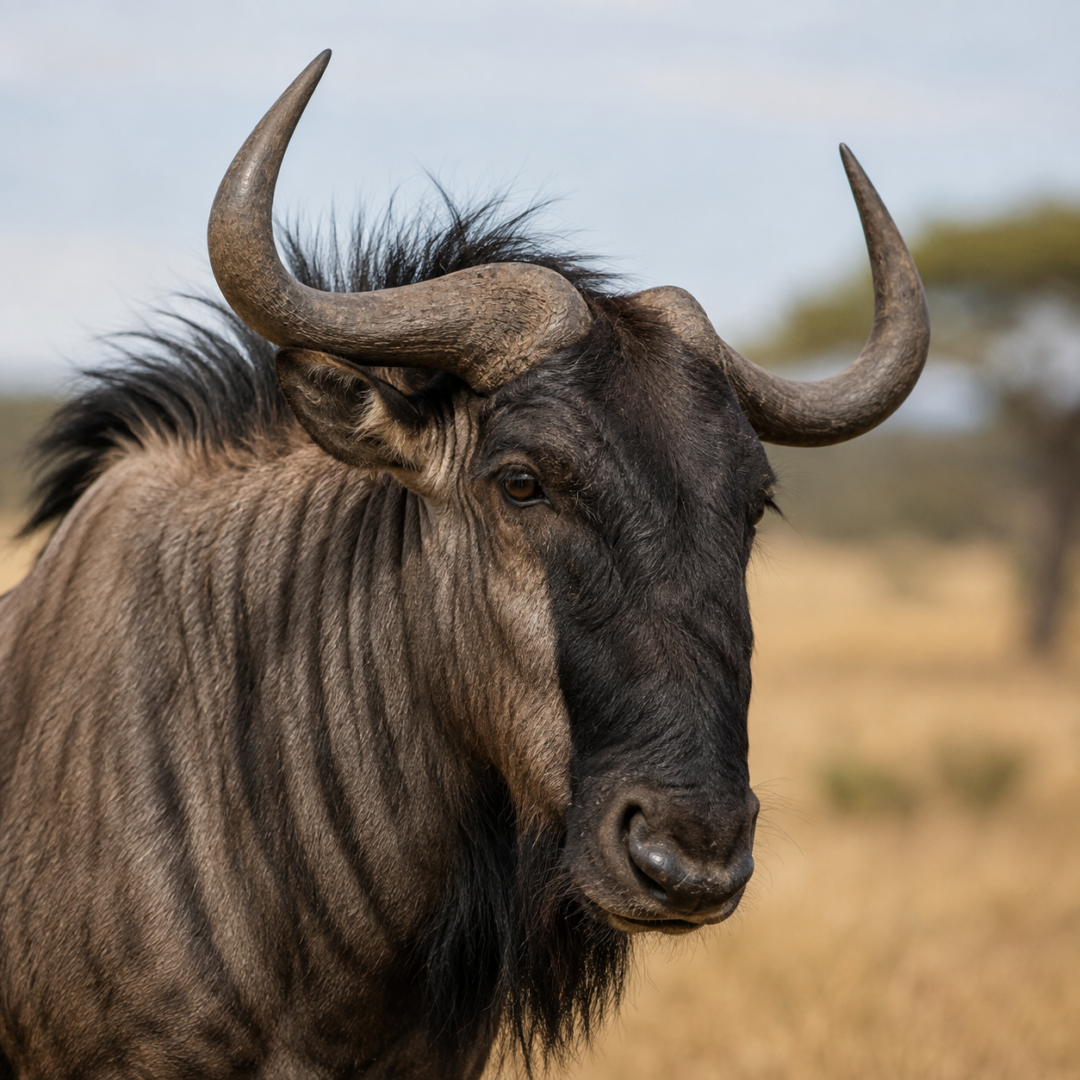
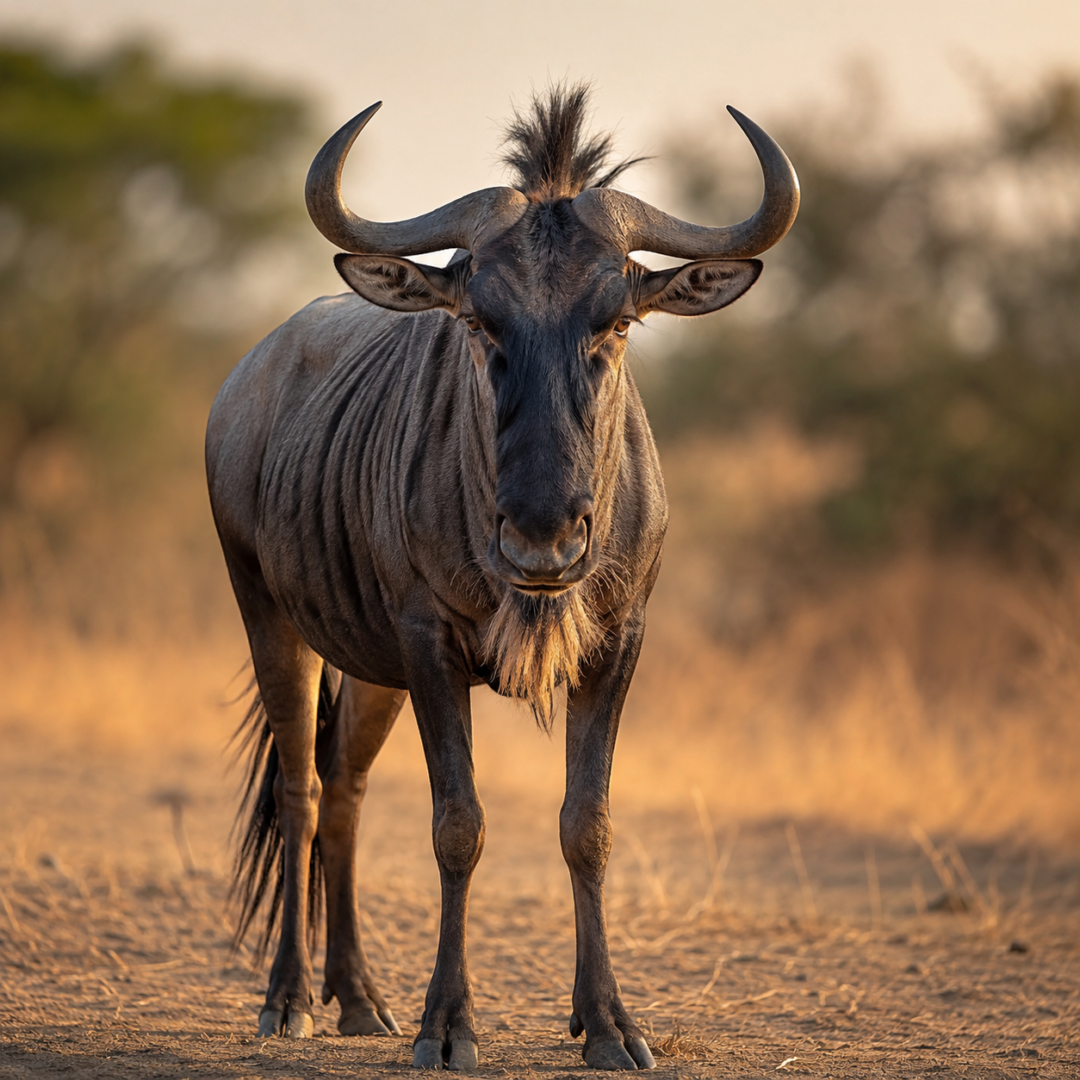
Rowland Ward Reference: Trophy quality is judged by mature horn length, horn spread, horn mass, symmetry, and overall horn development.
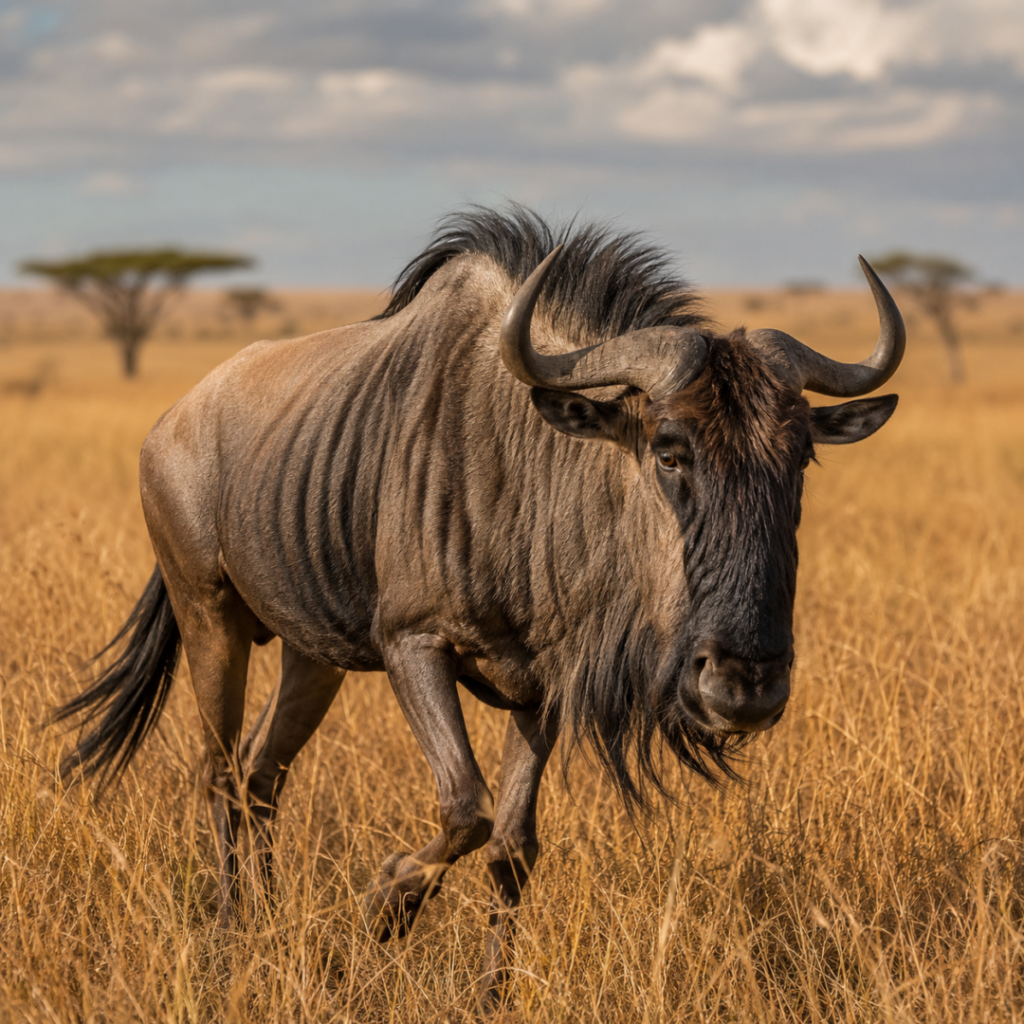
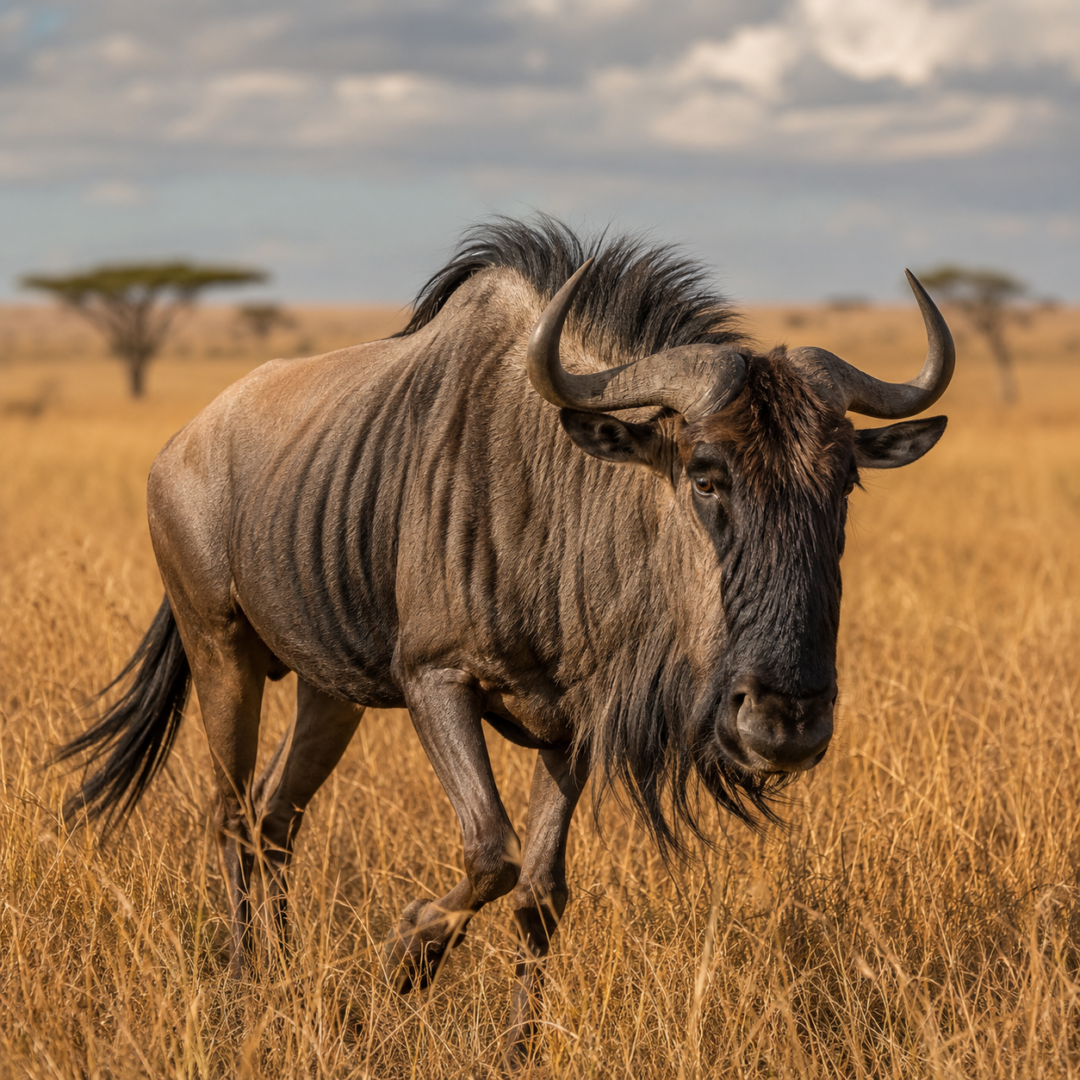
Ecological Role: Nyasaland Wildebeest are predominantly grazers, feeding mainly on grasses and helping maintain open savanna and woodland grasslands through their grazing activity. Their movement between feeding areas also contributes to nutrient cycling within the ecosystem. The taxon is associated with savanna interspersed with miombo woodland.
Hunting Heritage: Nyasaland Wildebeest is a distinctive regional plains-game animal, historically associated with south-eastern Africa and valued for its broad horns, pale colouring, robust build, and more restricted geographic range.
Fascinating Adaptation: Compared with the common blue wildebeest, Nyasaland Wildebeest have a paler grey-brown coat, lighter legs, a shorter tail, and horns that do not curve as strongly downward. These features help distinguish the regional form from other blue wildebeest populations.